
Key Takeaways
- Layoff news is a content trigger for career coaches, not a sympathy topic. Use it to reach people who are worried about job security before they have been let go.
- U.S. employers announced 529,914 job cuts through August 2026. The audience you want to reach is real and large.
- Instagram says most of what people see in Reels comes from accounts they do not follow. Reels is your discovery surface. Feed is not.
- The CCN framework tells you to aim your content at people who have never heard of you. Use it every time a layoff story breaks.
- Contrarian ideology is why layoff Reels get reshared. Go against the dominant narrative and people send the video to a friend.
- The first 24 to 48 hours after an announcement are your strongest window. After that, the wave is mostly gone.
- The goal of every layoff Reel is one thing: a discovery call booking.
What makes layoff news such a powerful content trigger for career coaches?
Layoff announcements create anxiety that spreads well beyond the people directly affected. The bigger audience is everyone who sees the headline and thinks: “Am I next?” That is who you are writing for, and that audience is far larger than the people who were just let go.
U.S. employers announced 529,914 job cuts through August 2026, with May alone hitting 97,006 cuts, the highest May total since 2020. The BLS JOLTS survey recorded 1,641,000 total layoffs and discharges in August 2026 alone. That is not a niche audience. That is a massive pool of people actively searching for guidance.
The key insight is this. You do not need to post content for people who have already been laid off. Post content for the people who are scared they might be next. That is a much larger audience, and those people are in discovery mode right now.
They are on Instagram. They are watching Reels. They are saving videos that tell them what to do if it happens to them.
You are a career coach. You have the answer. You just need to be on the screen when they are looking.
How does Instagram actually distribute career content to new audiences?
Most of what people see in Reels comes from accounts they do not follow. Reels is the discovery surface. Feed content reaches your existing followers. Reels reaches everyone else, including people who have never heard of you.
Instagram’s own ranking page confirms this directly. And the most weighted prediction signals for Reels are likelihood to reshare, watch completion, and likelihood to like, in roughly that order. Reshares outrank likes.
That changes how you write a layoff Reel. You are not writing for the people who already follow you and like your content. You are writing for a stranger who will either send this video to a worried friend or keep scrolling. Build for the share.
Instagram confirmed that creators of all sizes have an equal chance to reach new audiences through Reels recommendations. A brand-new career coach account can ride a trending layoff story just as well as a hundred-thousand-follower account, if the early signals are strong.
That levels the field entirely. You do not need a big audience to get reach. You need the right video at the right time.
What is CCN, and why does it change how you write layoff content?
CCN is Max’s framework for figuring out who your content is actually aimed at. It sounds technical, but the idea is simple: most coaches write for the wrong audience, and that is why their videos stall.
Most coaches post for their existing followers. They share tips their current audience already agrees with. The problem is that your current audience already knows you. They are not the people you need to reach.
The CCN framework separates your core audience (the people who already follow you) from your outer audience (the people who have never heard of you but would book a call if they saw the right video). The job of layoff content is specifically to reach that outer audience.
Here is a quick example. Say you are a career coach who works with mid-career professionals. Your core audience follows you for tactical resume and interview advice. But your outer audience is the 45-year-old professional who is quietly anxious after seeing the latest AI layoff news. She has never heard of you. She does not follow you. But if your Reel shows up in her feed and speaks directly to what she is afraid of, she saves it, shares it, and maybe sends you a DM.
Content aimed only at your core audience stalls. It gets watched by people who already know you, sits somewhere between a few hundred and a few thousand views, and disappears. The CCN framework pushes you to make the outer audience the target while staying specific enough that your core audience still shares it.
Most people think going viral is luck. It is not. It is a topic your core audience already cares about, aimed at people who have never heard of you. That swap is where ninety percent of coaches go wrong.
Read that again.
For layoff content, this means: aim the hook at the anxious mid-career professional who has never once considered hiring a career coach. Not the person who is already your client.
If you want to see how coaches have applied this kind of thinking to grow real audiences, the results coaches have shared show what the outer-audience shift actually produces.
How does contrarian ideology make a layoff Reel worth resharing?

Contrarian ideology is not about being edgy. It means taking a specific, defensible position that runs against the dominant narrative. That gap between your take and the mainstream is what drives reshares.
When layoff news breaks, the dominant narrative is almost always the same. “This is scary.” “The economy is rough.” “AI is taking jobs.” “It is a tough market out there.”
If your Reel agrees with all of that, you blend in. The viewer has already seen five versions of that take. They scroll past yours without a second thought.
Contrarian ideology says: find the one thing the dominant narrative gets wrong, and say that clearly instead.
A few examples for a career coach posting during a layoff cycle:
- The narrative says AI is destroying careers. Your contrarian angle: AI is eliminating roles, not careers. The distinction matters, and your content explains why.
- The narrative says getting laid off is a crisis. Your contrarian angle: the professionals who move fastest after a layoff consistently end up ahead of where they started.
- The narrative says the job market is too competitive. Your contrarian angle: most candidates are competing on the wrong signals entirely, and competition becomes irrelevant once you know what to fix.
None of these need to be inflammatory. All of them are specific, defensible, and go against what everyone else is saying.
But Max, does this mean I have to say something controversial every single time I post?
No. Contrarian ideology is not about controversy. It is about having a real perspective instead of a safe one. Most coaches post safe content because they are afraid to push anyone away. That is exactly why most coaches get ignored by the algorithm and by the people they most want to reach.
Pick one thing the mainstream narrative gets wrong about layoffs. Say it plainly. That is the whole move.
Here is why this drives reshares specifically. When someone hears a position they have privately held but never heard said out loud, they send it to a friend. That reshare is the signal the algorithm uses to push the video further. It is not just psychology. It is directly connected to how Instagram ranks and distributes Reels.
What should the first three seconds of a layoff Reel actually say?
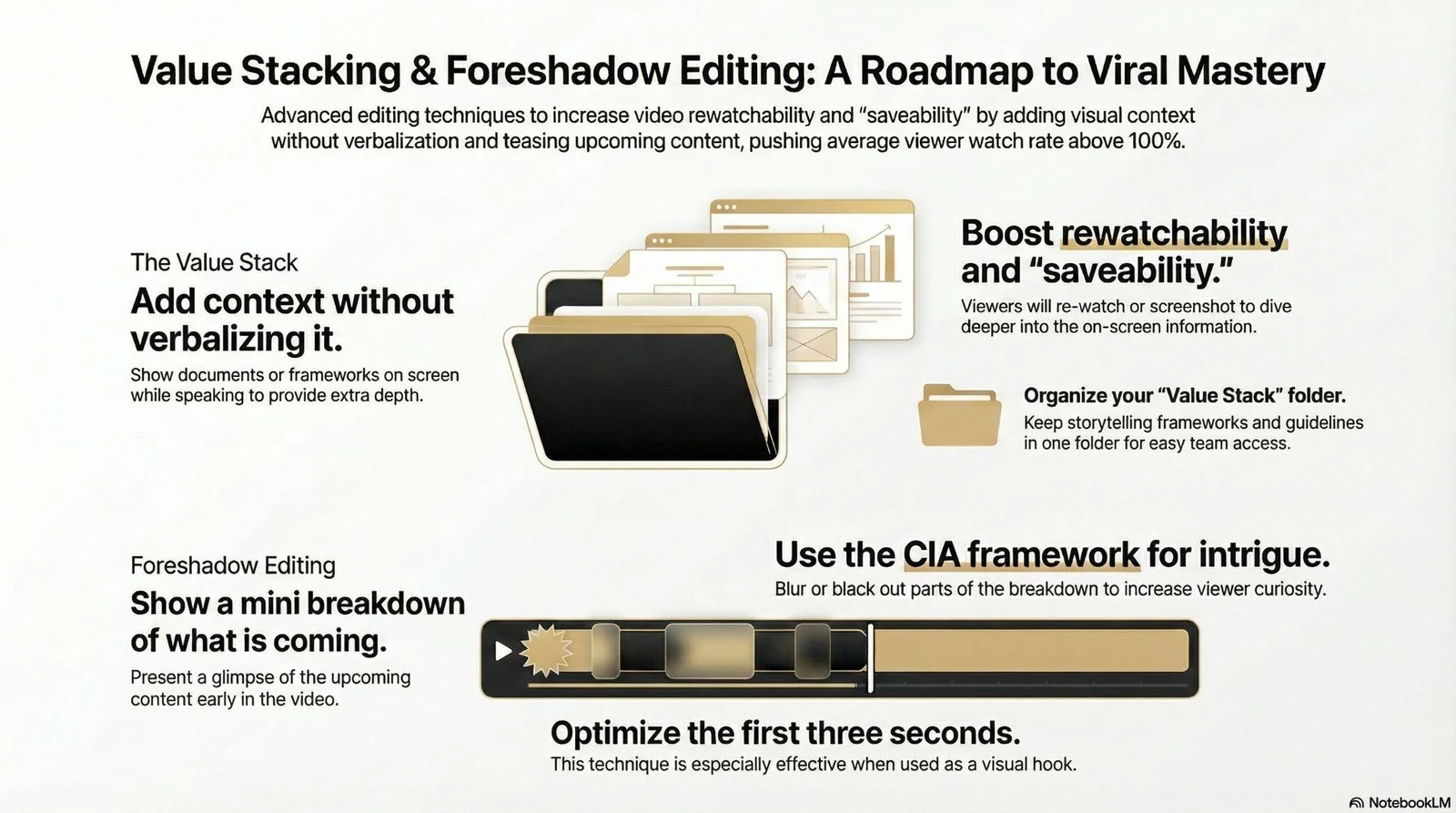
This is the hook, and it is the one part of your video that determines whether everything else gets seen. If you lose the viewer in the first three seconds, the algorithm treats the video as a miss and stops distributing it. Get the hook right first.
Instagram extended Reel recommendation eligibility to up to 3 minutes for US creators in early 2025. But the algorithm makes most of its distribution decisions based on early watch signals. A focused 90-second Reel with a strong hook will reach more people than a thorough 4-minute breakdown that loses viewers in the opening seconds.
For layoff content, the strongest hooks do one of three things.
Name the fear directly. “If you are watching these layoffs and quietly wondering if you are next, this video is for you.” The viewer self-selects. Only the relevant people stay.
Flip the conventional take. “Everyone is panicking about the AI layoffs. This is why that is the wrong reaction.” The contrarian framing creates a gap the viewer wants to close.
Name the moment. “You saw the news today. This is what to do next.” Timeliness is a hook on its own when the news is still fresh.
The hook is the first of the 7 building blocks, which is Max’s framework for structuring a video that earns full watch-throughs. The other blocks handle format, body, takeaway, and call to action. Each one has a specific job. But the hook is the one that determines whether any of the rest gets seen.
One idea per section. One hook. One point in the body. One takeaway. One ask at the end. If you want to see how these structures apply across different coaching formats, the post on Instagram Reel ideas for coaches breaks down what works and why.
How do you move a viewer from a Reel into a discovery call booking?
A great Reel gets watched. That is the first step, not the last. Without a clear path from the video to a conversation, the view disappears and nothing happens next.
The call to action at the end of a layoff Reel needs to be specific and low-friction. “Book a call” is too large a step for someone who just discovered you sixty seconds ago. “Send me the word ‘layoff’ in a DM and I will send you my three-step reset guide” is specific, achievable, and opens a real conversation.
The DM is where the coaching relationship starts. It is not a close. It is an open.
From that DM, your job is to qualify. Not every message becomes a client. But the person who DMs you after watching a layoff Reel is warmer than almost any cold audience, because they found you by self-selecting on a fear they already have.
If you are already getting clients through referrals but not through social media, the gap is usually right here. The content attracts the right people, but there is no structured path from viewer to conversation. The full breakdown of that pattern and how to close it is at marketing for coaches who rely on referrals.
When is the right window to post after a layoff announcement?
The first 24 to 48 hours after a major announcement are your strongest window. That is when search volume peaks, when people are sharing the news across every platform, and when the algorithm rewards timely content with organic momentum.
After 48 hours, the news cycle has moved on. Your Reel is competing with a crowded feed and no trending tailwind. It can still perform, but you are working harder for less return.
This means speed beats polish. A one-take video recorded on your phone within 24 hours of a major announcement will almost always outperform a carefully edited version posted five days later.
Keep your setup simple. Phone on a stand. A window for light. One clear point to make. That is enough.
Instagram also reduces distribution for content that has already been posted on the platform before. Repurposing an older video with new text overlay will not catch the algorithm wave when a fresh story breaks. The content needs to be new.
Should you test a layoff hook before it goes to your whole audience?

Yes, and Instagram has a built-in feature designed for exactly this. Trial Reels lets you publish to non-followers first before the video reaches your existing audience, so you can gauge real performance data without risking your relationship with your current followers.
Instagram confirmed Trial Reels in their creators update. Publish your layoff Reel as a Trial Reel. Watch the share and completion data for 24 hours. If it is performing well with non-followers, push it to your full audience. If not, adjust the hook or the angle before anyone who already follows you ever sees the miss.
This turns every layoff story into a low-risk test. You are not betting your relationship with your existing audience on a single angle. You are gathering real data before you commit.
What if the layoff news is not in your coaching niche?
It does not need to be. Major layoffs create anxiety that spreads beyond the affected sector, and that anxiety is the audience you are writing for. The professional in healthcare, education, or financial services sees a tech layoff headline and still wonders about their own security.
The AI attribution angle makes this especially broad. Challenger data shows AI was cited as the leading reason for job cuts for the fifth consecutive month through July 2026. AI-attributed cuts are not concentrated in one sector. The concern is close to universal among mid-career professionals.
If your clients are mid-career professionals of any stripe, layoff content is relevant to them. You do not need to be a specialist in the affected industry. You need a hook broad enough to include anyone who is worried about job security right now.
“Are you watching these layoffs and wondering if your role is safe?” is a hook that lands for a general career coaching audience, not only for people in tech.
Keep the hook broad. Keep the advice specific. That combination is what produces results.
How do you build a full week of content from one layoff story?
One news story is actually five to seven pieces of content if you break it down by angle. Each angle targets the same outer audience but from a different direction, so none of the videos repeat each other.
Day one: the reaction. Post your contrarian take within 24 hours. Speed matters more than production quality here.
Day two: the mechanism. What specifically should someone do if this happens to them? One step, not a list of ten.
Day three: the mindset shift. What separates the people who move fast from the ones who freeze? This is where your coaching philosophy comes through.
Day four: the myth-bust. Pick the most common piece of advice circulating in the coverage and explain why it is wrong, or at least incomplete.
Day five: the path forward. What does the next few months actually look like for someone who takes the right steps? Keep this concrete and mechanism-based.
That is five distinct videos from a single story. No redundancy. Each one speaks to the outer audience you defined with the CCN framework, but gives them a different reason to stay, save, and share.
If you want more frameworks to fill the content calendar beyond timely news cycles, what coaches should post on Instagram when they run out of ideas has the structure that works for any week, not just layoff season.
Layoff content is not a one-off tactic. It is a repeatable system. Every time a major story breaks, you have a new trigger, a new outer audience in discovery mode, and a new reason to post. The coaches who build this habit are the ones who find that social media stops being a mystery and starts being a pipeline.
The full system, from first Reel to booked call, lives at how to get clients as a career coach.
Want the templates behind content that actually gets watched? Grab the templates here and start with the first one today.