
Key Takeaways
- Most coaches try to book discovery calls before the content has done its job. That is the core mistake.
- If your content is built on the CIA framework (curiosity, intrigue, authority), the person who messages you is already pre-sold on talking.
- Instagram ranks reshares as the top signal for Reels distribution. Reshares push content to strangers. Strangers who do not follow you yet are your actual client pipeline.
- A contextual credibility statement tells the right viewer why you specifically are worth a call. It does not need a dollar figure to do that job. It needs precision.
- The CTA inside the video is what moves a viewer into your DMs. Without it, the content is entertainment, not a business asset.
- 50% of U.S. adults now use Instagram, based on Pew Research tracking through mid-2025. Your next client is almost certainly there.
How to Book Discovery Calls from Social Media: What Everyone Gets Wrong
The standard advice for how to book discovery calls from social media goes like this.
Post consistently. Add your calendar link to your bio. Offer a free audit. Follow up with people who engage.
None of that is wrong. But it starts in the wrong place.
All of that advice assumes the person who finds your booking link is a stranger who needs to be warmed up on the phone. If your content has done its job, that is not true. The viewer is already warm before they type a single word to you.
The DM is not the warm-up. The content is. The call is scheduling, not selling.
That inversion is what this post is about.
What Has to Be True Before Anyone Books a Call?
Someone has to decide, before they ever message you, that a call with you is worth their time. That decision happens in the video. Not in the DM. Not on the phone. In the video, while they are still scrolling.
Most coaches treat the call booking as a conversion problem. Fix the intake form. Rewrite the follow-up sequence. Optimize the calendar page. Those things matter at the margin. But none of them fix content that was not built to move the right people in the first place.
You cannot convert someone who was never interested. And you cannot make someone interested on a cold call if the content never made the case.
So the real question is not: how do I get more people to book?
The real question is: what does the content have to do first?
Why Does Reaching Non-Followers Matter More Than Anything Else?
You can only book calls from people who saw your content. If the content only reaches your existing followers, your pipeline is capped at people who already know you. That is a closed room with a ceiling.
Instagram runs separate ranking systems for Feed, Stories, Explore, Reels, and Search. Reels and Explore are specifically built to surface content for people who are not yet following you. Feed is mostly your existing audience. Reels is the open door to strangers.
That distinction is super duper key. If your content only resonates with people who already follow you, it mostly lives in Feed. Feed is a room you already own. Reels is the room where new clients find you.
And here is why that matters right now. As of 2025, 50% of U.S. adults use Instagram, from a Pew Research survey of 5,022 adults conducted February through June of that year. It is the first time Pew has tracked that platform at that threshold. Half of American adults are there. Your next five clients are almost certainly in that half. The question is whether your content ever reaches them.
What Does Instagram Actually Rank First on Reels?
Resharing. Not likes. Not comments. The number one signal Instagram uses to decide how widely to distribute a Reel is whether viewers share it with someone else. Likes feel good. Reshares move the needle.
Instagram’s own published explanation lists four things it predicts for a Reel: will the viewer reshare it, watch all the way through, like it, and watch again in full screen. Resharing is at the top of that list.
Think about what that means for your strategy.
A video that your followers enjoy but never send to anyone stays in your current circle. A video that someone screenshots and sends to a friend who has the exact problem your business solves, that gets distributed to people who have never heard of you. The algorithm reads that reshare as evidence that the content is valuable to a specific type of person, and it looks for more people like them.
That single mechanic is why “make content your ideal client would send to a friend” is not a cliche. It is literally how the distribution system works. Boom.
What Is the CIA Framework and How Does It Set Up the Call?
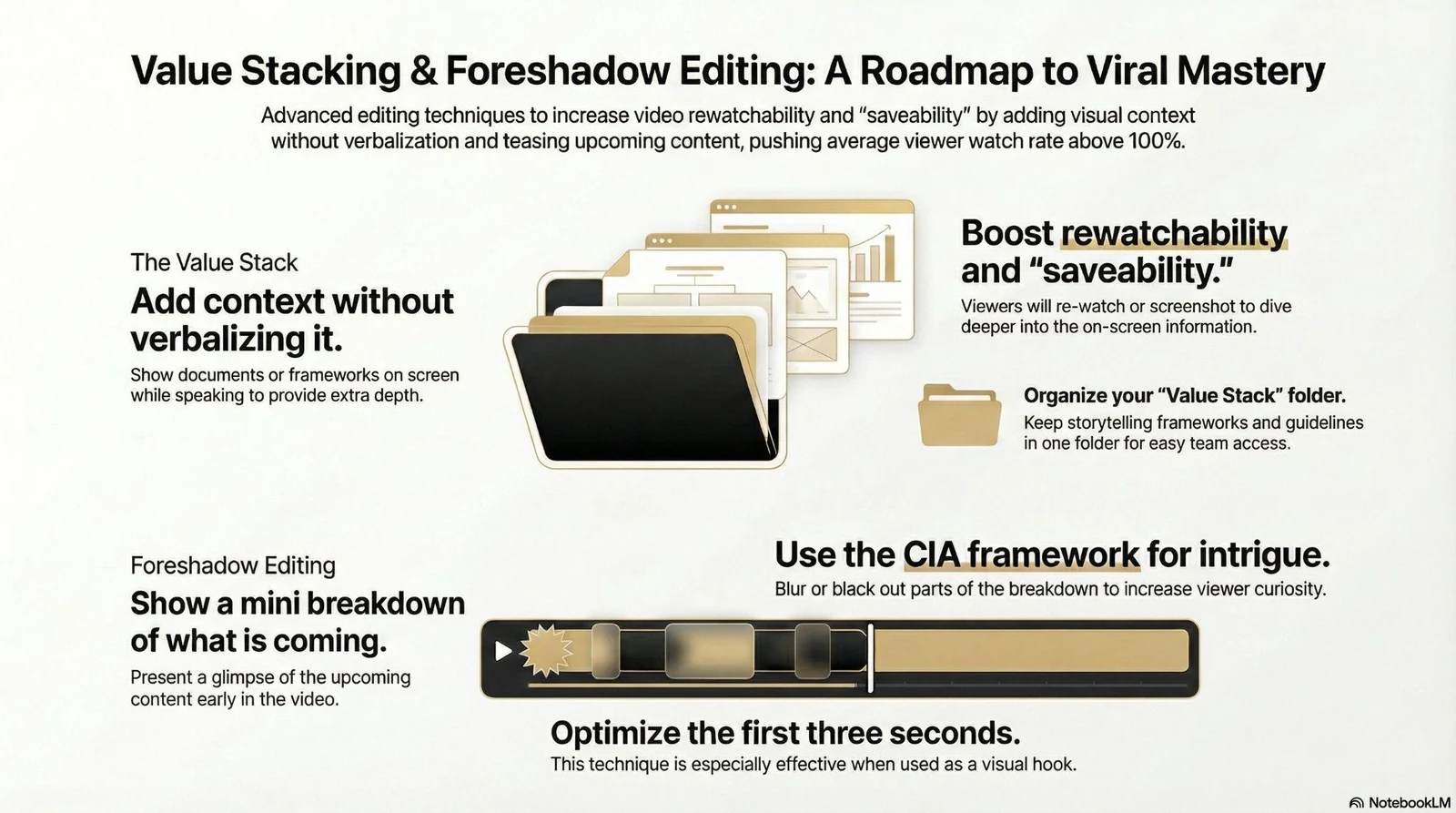
CIA stands for curiosity, intrigue, and authority. It is the structure that makes a viewer stay, pay attention, and believe you know what you are talking about. All three together are what make someone think: I need to talk to this person.
Here is how each piece works.
Curiosity is the hook. It is the first three seconds of the video. The job of the hook is to make the specific viewer you want as a client think: I need to see the rest of this. Not everyone. Your person.
A business owner stuck at 200 views per Reel who has tried everything hears “if your Reels keep stalling under a thousand views, here is the one thing nobody tells you” and does not scroll. That hook is not trying to appeal to everyone. It is aimed straight at one type of person.
Intrigue is the middle. This is where you raise the stakes before you answer the question. Here is what most people get wrong. Here is why it matters. Here is the piece everyone misses. You are building to a point, and the viewer is staying to reach it.
Authority is where you close. This is where the credibility statement lives.
But Max, how do you build authority without talking about results?
Authority comes from how precisely you describe the problem. When you say “videos that only interest your current audience stall between 100 and 900 views because the algorithm reads them as low-ceiling content,” the person with 400-view Reels leans forward. They think: this person knows exactly what I am dealing with.
That specificity is the credibility. You do not need a screenshot. You need precision. That is mechanism-based authority, and it is available to you regardless of how long you have been in business.
How Do You Use a Credibility Statement Without Talking About Money?
A contextual credibility statement is a targeted claim specific to the exact topic you are covering right now. It tells the viewer why your take on this particular topic is worth their attention. It does not need a dollar figure. It needs specificity.
Max teaches two types.
The general credibility statement is the broad overview of your track record. This lives in your bio, your hero story, and your profile. It answers the question: who is this person and why should I listen at all?
The contextual credibility statement is what goes inside the video itself. It is a narrow slice of your overall experience, aimed directly at the topic in front of you right now.
If you are teaching how Reels reach non-followers, a contextual statement might be: “I have tested this on accounts starting from zero and accounts with a hundred thousand followers, and the same mechanic holds in both cases.” That is a claim about range and direct experience. No numbers on a slide. No income figures. It is specific to the topic. It answers the viewer’s real question: has this person actually done this?
But Max, what if I am just starting out and I don’t have much of a track record?
Then your contextual credibility is your process. “I ran this framework on my own account and I am going to show you exactly what happened.” Specificity wins every time. Vague authority (“I have helped many clients achieve their goals”) loses every time.
You can go deeper on how to build and sequence these statements in the full breakdown of the credibility bank.
What CTA Actually Gets Someone Into Your DMs?
The comment-keyword CTA. You say at the end of the video: comment [keyword] below and I will send you [the specific thing] right in your DMs. The viewer comments. The DM opens. The conversation starts. That is the whole mechanic.
Here is what most coaches do instead. “Link in bio.” The viewer has to stop, navigate to the profile, find the link, click through to a booking or landing page. Each step loses people. The friction is built-in.
The comment-keyword method removes almost all of that friction. One action. One word in the comments. Done.
Hold on. What if I am not set up with automation yet?
That is fine. You can do this manually. Someone comments the keyword, you send them the message by hand. You do not need a tool on day one. The mechanic works either way. When your volume makes manual replies too slow, that is when automation earns its place.
The DM conversation that follows is where you qualify them. You find out what they are working on, what they have tried, and whether a call makes sense. See how to sell coaching in your Instagram DMs and how to qualify a lead in DMs before you ever mention price for what to say once the conversation opens. This post is about what makes the conversation start.
Does Instagram Work Against You If You Don’t Pay for Ads?
No. Instagram has stated directly that it does not suppress content to push creators toward paid ads. Its business model depends on growing reach for engaging content. Your organic Reels and the platform’s incentives are aligned, not opposed.
Instagram has published this position explicitly: it is more profitable for the platform to grow reach for the most engaging content, and then sell ads to others. The organic creator and the platform are on the same side of that equation.
There is more. In April 2026, Instagram announced it is rewarding original creators in its recommendation system. Accounts that produce original content now receive more distribution than accounts that repost or aggregate others’ content. If you are making your own Reels from scratch, the algorithm is actively working in your favor right now.
This matters because the most common objection I hear from coaches is: “I can’t compete organically.” That objection rests on a false premise. Anywho, let’s crack into the sequence that actually books the calls.
What Are the Three Ending Types That Protect Your Watch Time?

Abrupt end, loop, and CTA. Each one protects watch time by cutting off the long sign-off that gives viewers time to scroll. For call bookings, the CTA ending is the one you want.
Most creators end their videos like this: “Anyways, that’s it for today, thanks so much for watching, if you liked this make sure to follow for more.” That is a scroll trigger. The viewer sees the wind-down coming and their thumb starts moving.
The three clean options:
The abrupt ending just stops. The video ends at the last piece of value. No wind-down. The viewer gets no warning, which means no chance to scroll before the video is over.
The loop connects the last line back to the first line of the video. If you open with “I am going to show you why your Reels stop at 400 views,” you close with “…and that is exactly why they stop at 400 views.” The video feeds back into itself. Watch time goes above 100% because people watch the start again without realizing it.
The CTA ending is: comment [keyword] below for [the specific thing]. Thirty seconds of Reel, one clear action at the end. This is the ending you use when your goal is DMs and call bookings.
Pick one. Do not try to layer them. A video that loops into a CTA into a sign-off has three endings and no ending.
How Does the Full Sequence from Content to Call Actually Work?
A video with CIA structure reaches non-followers through Reels. Reshares push it further. The right viewers watch through to the CTA. They comment the keyword. They enter your DMs. You qualify them. You book the call. That is the complete sequence.
Let me slow it down.
Step one. The hook qualifies the viewer in the first three seconds. Your hook should be specific enough that people who are not your ideal client scroll away. That is a feature, not a problem. You want self-selection. The more specific the hook, the higher the signal-to-noise ratio in your DMs.
Step two. CIA builds curiosity, raises stakes, and closes with authority through mechanism. By the end of the video, the right viewer has a name for what was wrong, a way to think about fixing it, and a sense that you have been in their exact situation.
Step three. The CTA closes with a single action. Comment the keyword. One move. No friction.
Step four. The DM conversation is where you qualify them properly. Ask what they are working on. Ask what they have already tried. Ask what a real win would look like. Those three questions tell you whether a call is the right next step. If the answers line up, you invite them. If not, you have not wasted a call slot on the wrong person.
Step five. The call itself. By this point, they watched your video. They sent the keyword. They told you what they are dealing with. They are not a cold lead. They are someone who has already decided you might be the right person to help them. You are showing up to confirm the fit, not to make the case from scratch.
That is what makes this different from cold outreach. The content does the selling. You show up to the call to confirm. You get the gist.
How Do You Know If the Content Is Doing Its Job?
Watch your reshare count and your DM volume. Reshares tell you whether the content is spreading to non-followers. DM volume tells you whether the CTA is converting. Those two numbers are the real signal. Everything else is noise.
Likes are vanity. Comments can be gamed. Reshares and DMs are behaviorally expensive. Nobody reshares a video unless they genuinely believe someone else needs to see it. Nobody sends you a keyword unless the video moved them to act.
If your Reels are earning likes but no reshares, the content is entertaining your existing followers. The hook is probably too broad or too inside-baseball for your niche. The guide to resetting the Instagram algorithm is a good place to start if your content feels stuck in a narrow distribution pattern.
If you are getting reshares but no DMs, the content is reaching new people but the CTA is missing or weak. The video is doing its reach job. It is not doing its conversion job. Fix the ending.
If you are getting DMs but few calls booked, the qualification step in the DM needs work. That is the last piece of the sequence.
Each failure mode points to a different part of the system. That is what makes it diagnosable. You are not guessing at “why isn’t it working.” You are looking at one number and following it to the broken part.
A Note on Volume and Consistency
One more thing before you go.
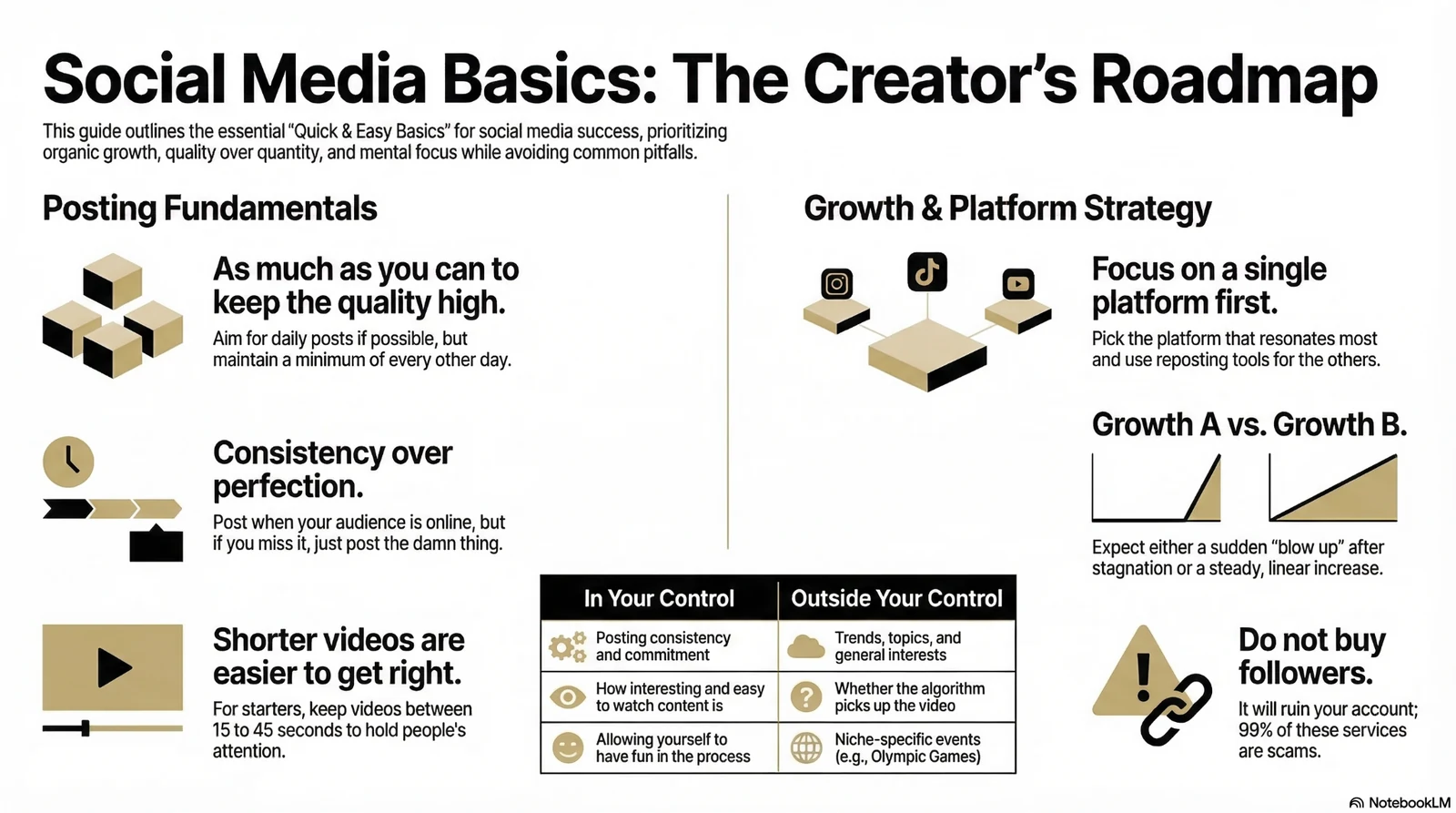
None of this works on one post a month.
Instagram’s global advertising reach is approximately 1.99 billion users. The platform is not short on content. You are competing for attention in a very full room, and the algorithm needs enough data points to know who to show your content to.
The coaches who build consistent call pipelines from social media post original Reels regularly, test hooks, watch reshare counts, and adjust their topics based on what actually spreads. They treat content like a system. Not a creative project that happens when they feel inspired or have free time on a Tuesday afternoon.
The call volume is a lagging indicator. It follows content quality and consistency by several weeks. If you want more calls booked thirty days from now, the content work is happening today.
Start with one original Reel built on a proper CIA structure with a comment-keyword CTA at the end. Watch the reshares. Watch the DMs. Adjust the hook, adjust the topic, and do it again. That is pretty straightforward, and it is the whole system.
If you want to see how Max has applied this approach for business owners and coaches who already have a product to sell, the background is on his about page.
Want the templates behind content that actually gets watched? Grab the templates here and start with the first one today.