
Key Takeaways
- The phone that films your reel is the same device that delivers your coaching on Zoom. That coherence is a trust signal, and it is the one most coaches throw away.
- Instagram’s algorithm now rewards original, raw content. Heavily produced reels look like ads. Ads get skipped by the exact people you want to reach.
- The credibility bank fills one specific, useful video at a time. Your buyer checks the balance before they book a call. Every vague or overly produced video fails to deposit anything.
- The CCN framework determines which viewers actually judge your content and decide whether to follow. Phone-filmed reels designed for someone who has never heard of you reach the layer where real growth happens.
- Shot type, framing, and environment are all trust signals. A medium shot in your real workspace tells a buyer more than any ring light or backdrop ever could.
- Instagram accepts any phone that shoots 720p or higher at 30 FPS. Most phones made in the last four years clear that bar without touching a setting.
Can you really film reels on your phone that sell your coaching offer?
Yes. Here is the reason.
Your buyer is not judging the camera. They are deciding whether to trust you with a problem they have not solved yet. A phone-filmed video in your real environment answers that question more directly than a polished studio setup.
Most creators think going viral is about production quality. It is not. It is a topic the right person already cares about, delivered by someone they are starting to trust. That trust does not come from a ring light. It comes from what you say and how honestly you show up.
Let’s crack into it.
What does a buyer need to see before they hire a coach?
A buyer needs evidence that you understand their specific problem. Thirty seconds of you naming their exact situation, in plain language, does more work than three minutes of impressive graphics. They are watching to answer one question: does this person actually get me?
The question your reel needs to answer is not “does this look expensive?” It is “is this person telling the truth about what they know?” Those are different questions. Most coaches spend money trying to answer the first one. The buyer is asking the second.
The credibility bank: the framework behind every trust-building video

Here is the first framework. I call it the credibility bank. I know, the name is a bit much. Stick with it.
Every video you post is a transaction. You are either making a deposit or you are not.
A deposit is a video where you give something specific, useful, and true. You explain exactly how a mechanism works. You name a mistake your viewer is probably making right now and show how to fix it. You walk through a step-by-step process and the viewer finishes the video knowing something they did not know before they hit play.
A non-deposit is a video that says something vague. “You just need to believe in yourself.” “Consistency is the key.” “Your mindset is holding you back.” These are words the viewer has already heard from every other account they follow. They add nothing to your balance.
Here is why this matters when you are picking up your phone to film.
When a viewer finds your profile before they buy, they do not read your bio first. They watch two or three videos. They are checking the balance in your credibility bank. A high balance tells them: this person clearly knows what they are talking about. I trust what they say next. A low balance tells them: this feels familiar but vague. I am not sure this person has actually done this work.
Now think about what phone filming signals.
A video filmed at your actual desk, in your real workspace, with natural light coming through the window, says something specific. It says: this is where I do the work. You are not performing expertise in a rented studio. You are demonstrating it in the environment where it actually happens. A desk with notebooks on it. A bookshelf with books you have actually read. A window, a coffee mug, and so on and so forth. All of it tells the viewer something true.
That is a deposit.
Hold on, Max. Are you saying I should never try to look good on camera?
No. Look clean. Look put together. Speak clearly. Those things matter and they are within reach without a studio. What I am saying is that every minute you spend on aesthetics at the expense of specificity is a minute you are not making a deposit. The buyer is not checking your camera quality. They are checking your balance.
Read that again.
A slightly rough video that names the exact problem your buyer has been stuck on for six months converts that buyer. A beautiful video that says something every coach says converts no one. If you are a business owner or coach who already has some following, think about the last few people who reached out to work with you. Did they mention how your videos looked? Or did they say something like, “That video felt like you were talking directly to me”? That is the credibility bank at work.
Why does polished content work against coaches specifically?
Because polished looks like an ad, and ads get skipped. Users who spend over an hour daily on the platform, according to DataReportal’s 2026 Global Overview, have trained themselves to scroll past anything that signals “sponsored content.” When your reel opens with a branded intro and a professional voiceover, their brain reads it as an ad before you say a word.
A phone-filmed reel, shot in a real environment, with direct eye contact, pattern-interrupts that response. It signals: this is a real person talking directly to you right now. That is the opening a coaching reel needs.
Adam Mosseri wrote at the end of 2025 that authenticity is becoming a scarce resource and that imperfection is now a signal of realness in an era when AI can generate polished content at scale. That is not an aesthetic trend. That is a policy direction from the person running Instagram.
In April 2026, Instagram extended that direction to photos and carousels. Accounts posting mostly other people’s content lose recommendation eligibility. They stop being shown to people who do not already follow them. For a coach filming their own ideas on their own phone, that is a structural advantage built directly into the algorithm.
The CCN framework: who actually judges your content

Here is the second framework, and this one is super duper key if you want your phone-filmed reels to reach people who have never heard of you.
I call it the CCN framework. It describes the three layers of viewers who see every video you post and make a decision about it.
Core. These are your existing followers. They already know you. They will watch most things you post because they have already decided to pay attention. This group is small and relatively stable.
Casual. These are people who have seen one or two of your videos but have not committed to following. They might. It depends on what they see next.
New. These are people who have never heard of you. They found this video because the algorithm surfaced it or because someone shared it. They have zero prior trust. Every element of your video is brand new information to them.
The CCN framework determines who actually judges your content and makes a decision about following or buying. Here is the key insight.
If your video is designed only for the Core layer, the algorithm shows it to your existing followers and then it stalls. Videos that only interest people who already know you stall between 100 and 900 views. That is the ceiling when you are speaking to an audience that has already formed.
When your video is designed to be understood and valued by someone who has never seen you before, the algorithm keeps pushing. That is where growth lives. That is the New layer.
But Max, how does phone filming connect to reaching the New viewer?
The New viewer is making a decision in the first two seconds. Keep watching or scroll? They have zero context about you. What do they look for? A real person. A direct statement. A specific claim about a problem they recognize as their own.
A phone-filmed video at eye level, medium framing, in a natural environment reads as real. The New viewer’s guard comes down because the video does not look like it was produced to sell them something.
A polished, branded video reads as content made for a wide, general audience. The New viewer’s brain says: this is not for me specifically. And they leave.
Your phone is not a limitation. For the New viewer, your phone is the right tool.
Does Instagram actually want raw, phone-filmed content?
Yes, and that became explicit platform policy in late 2025. Mosseri stated that imperfection signals humanity in an era when AI can generate polished content at scale. Instagram wants to surface real people. Your phone is a direct path to that category.
In August 2026, Instagram began requiring labels on profiles showing AI-generated people. A real coach filming themselves on a real phone is exactly the category Instagram is actively working to surface. You are what the platform is trying to protect.
What shot should you use for a coaching offer reel?
Use a medium shot, waist up, eyes in the upper third of the frame. Tight headshots work for established audiences but read as confrontational to someone meeting you for the first time. A medium shot gives the viewer more information: your hands, your posture, your environment. All of that builds trust before you say a single word.
Sitting at a desk signals: this is where I do the work. Standing against a wall is neutral. Neither is wrong, but the desk shot deposits more into the credibility bank because it shows context.
For hands-free recording, Instagram’s built-in Timer and Countdown tool sets a three-second countdown so you can step into frame before filming starts. No extra person needed.
On the technical side: Instagram requires a minimum of 720p at 30 FPS, with a 9:16 aspect ratio. Any phone made in the last four years handles this automatically. You do not need to change a setting. Point, film, done.
What should be behind you when you film?
Your real environment. Not a blank wall. Not a printed backdrop.
A bookshelf. A desk with notes on it. A window with actual light coming through. These are visual deposits in the credibility bank. They tell the viewer something true about where you work and how you spend your time. A blank wall or a fake backdrop removes that information entirely. The viewer cannot verify anything. You become a face against a background, which is the same format as every other talking-head video they scroll past.
Think about the full picture. Your coaching buyer will get on a Zoom call with you before they pay. That call will be filmed on the same phone, in the same room, with the same background. When they see your reel first, they are previewing the experience of working with you. If the reel looks like a studio and the call looks like your home office, there is a gap. That gap costs trust even if the buyer cannot name exactly what is off.
Keep the reel and the call in the same environment. What they see is what they get. That coherence is worth more than any backdrop you can order online.
How should you edit a phone-filmed coaching reel?
Keep the editing simple. Your goal is to remove dead air, not to add production value. Cut before you speak and right after you finish the sentence. Use jump cuts freely. They read as confident and energetic in short-form video. Add captions because most people watch on silent for the first pass.
Max’s approach is to do all rough cuts in a third-party app first, then add text and audio in Instagram directly. CapCut is the app he walks through in his lessons and it works well. Instagram also launched its own dedicated editing app called Edits in April 2025. It exports without a watermark, has a frame-accurate timeline, and was built specifically for phone-first creators. Both are free. Use whichever one you will actually open every time you film. You get the gist: the edit that gets done beats the edit you planned to do.
Do not add transitions that compete with your face. Do not add background music louder than your voice. Do not add graphics that cover you while you are teaching. Every element that is not you delivering your specific idea is a distraction from the deposit you are making. Strip it.
How does phone filming connect directly to the coaching offer?
More directly than any other format. Your coaching is delivered on Zoom. Zoom runs on a phone or laptop. The viewer watching your reel is experiencing almost exactly what it will feel like to work with you.
The reel is a demo. And it is the most honest demo you can give.
That is freaking powerful, and most coaches miss it completely.
A studio-produced video breaks that continuity. It says: the preview looked cinematic, but the actual experience is a Zoom call on a phone. Your buyer senses the gap even if they cannot name it. It creates a small doubt: is this person who they appear to be? Any doubt at that stage in the relationship costs you the booking.
Film the reel the way you show up for a client call. Same energy, same environment, same device. The reel becomes the truest possible preview of what the buyer is purchasing. There is no gap. No bait and switch. Just the same person, on the same phone, in the same room, doing the work.
If you want to see how coaches who applied this approach describe the experience, read through their results.
A note on consistency and what Instagram tracks
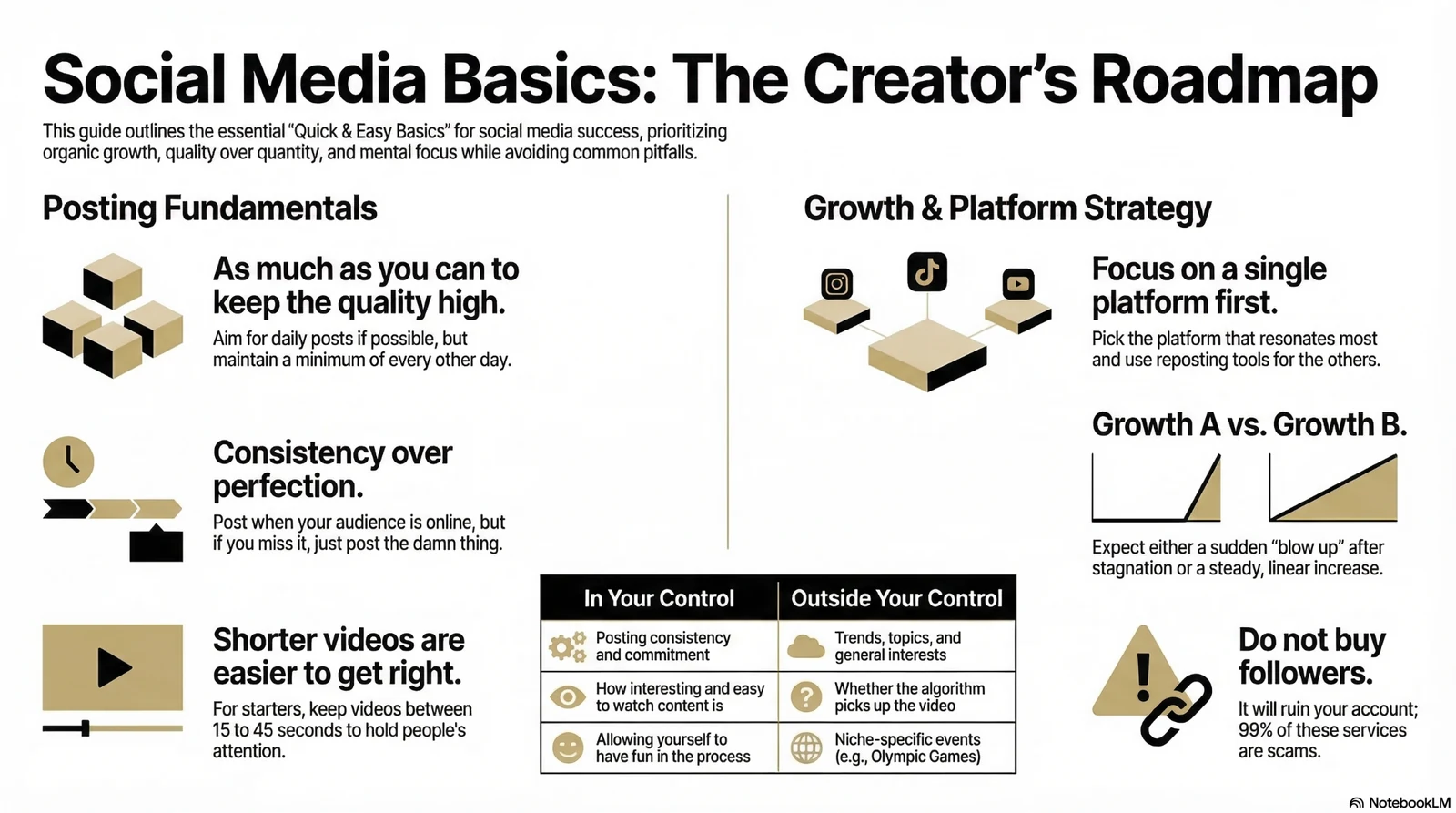
Instagram identifies six qualities it looks for in successful Reels: relatability, authenticity, timeliness, accessibility, visual interest, and simplicity.
Notice what is not on that list: production budget.
The two at the top, relatability and authenticity, are exactly what phone-filmed content in a real environment delivers. Instagram is telling you directly what it rewards. Most creators ignore that list and keep shopping for better equipment.
You do not need better equipment. You need a sharper idea, a real environment, and the discipline to show up and film it. For more on how to build the content structure that goes inside the reel once the filming is right, see the full breakdown on how to make Instagram Reels that convert to sales.
What about reach? Does any of this actually get seen?
Yes. The scale is there. DataReportal’s 2026 Global Overview shows that 55.1% of online adults use Instagram monthly, averaging over an hour daily on the platform. The audience is not the problem. Whether your content is designed to reach the right part of that audience is.
That comes back to the CCN framework. When you design for the New layer, and when the algorithm is actively surfacing authentic, original content from real creators, you are working with the platform instead of pushing against it.
Phone-filmed reels from a real coach, in a real environment, teaching a specific idea are exactly what both the algorithm and the New viewer want right now. Anywho, that is the foundation. What you do with the viewer once the reel lands is the next conversation.
Frequently Asked Questions
Do I need special lighting to film coaching reels?
Natural light from a window is usually enough. Face the window so the light falls on your face, not behind you. If you film at night, a basic ring light or a desk lamp pointed at your face does the job. You do not need a professional lighting setup. Investing in one before your content is converting is the wrong sequence entirely.
How long should a coaching offer reel be?
Instagram now supports Reels up to 20 minutes. For an offer reel, aim for the shortest version that delivers the full idea. That is usually 60 to 90 seconds. If the mechanism genuinely needs more room, go longer. The only rule is to cut everything that does not serve the specific idea you are teaching.
Should I use the front camera or the back camera?
Use the front camera for talking-head reels. You can maintain eye contact with the lens, which reads as direct and confident on screen. The back camera has better optical quality on most phones but is harder to frame accurately without a second person or a dedicated mount.
Can I repurpose a coaching reel on other platforms?
Yes. A 9:16 vertical video filmed on your phone exports cleanly to TikTok and YouTube Shorts with no re-editing. If you want to post it to LinkedIn or YouTube, crop to 1:1 or 16:9 before uploading. See the full guide on how to repurpose long-form content for Instagram for the step-by-step on multi-platform workflows.
What if I am not comfortable on camera yet?
Start with five-second clips. One idea. One sentence. One specific claim about something you know is true in your niche. Do that ten times. By the tenth clip, the camera is less of an obstacle. For a full walkthrough on this, see how to grow on Instagram as an introvert.
Want the templates behind content that actually gets watched? Grab the templates here and start with the first one today.