
Key Takeaways
- Most Instagram growth strategies stop at follower count. For coaches, follower count is not the goal. Booked client conversations are.
- Instagram’s own ranking data shows resharing is the top predicted action for Reels. Content people forward to a friend earns the most distribution.
- Max Tornow’s CCN framework determines whether your content attracts buyers or browsers. Get this wrong and more views can actually work against you.
- The CIA framework gives each video a clear three-phase structure so viewers move from watching to wanting to take a next step, not just scrolling on.
- There are two growth curves on Instagram. Knowing which one you are on stops you from quitting before it pays off.
- This 90-day instagram growth strategy phases your effort: foundation in month one, quality iteration in month two, conversion in month three.
Why Coaches Need a Different Instagram Growth Strategy
Search “instagram growth strategy” right now and you will find the same list written ten different ways.
Post more Reels. Write keyword captions. Use strong hooks. Add a CTA.
That advice is not wrong. It is just incomplete. And for coaches, incomplete means it misses the entire point.
A content creator needs views. A coach needs clients.
Those two goals require different content, a different way of measuring what is working, and a different framework for deciding what to say.
Every major article on this topic treats follower count as the finish line. Not one of them explains how Instagram attention becomes a discovery call. Not one teaches you which views actually matter versus which ones just make the numbers look good.
This post fixes that. Ninety days. Two frameworks. One specific path from stranger to booked client.
Let’s crack into it.
What Does Instagram Actually Reward in 2026?
The top signals are sends per reach, watch time, and likes. Instagram’s head Adam Mosseri named sends per reach as the single best indicator of content performance in January 2025. Content that people forward to a friend earns the most distribution. Every decision in this 90-day plan is built around optimizing that signal.
Here is what Mosseri said directly: “If you’re trying to evaluate how your content is doing on Instagram, I would look at sends per reach. Of the people who saw it, how many of them sent it to a friend? That tends to be the content that does the best because it tends to drive the most value for the overall community.”
Instagram’s official ranking explanation backs this up. For Reels, the top predicted action is resharing. For Feed, the top predictions include spending a few seconds on a post, commenting, liking, and resharing.
A video that gets 10,000 views but nobody shares? The algorithm registers it as noise and moves on.
A video that gets 2,000 views and 400 people forward it to a friend? The algorithm reads that as a meaningful signal and starts pushing it further.
For coaches, this is freaking good news. The content that gets sent between friends is usually the content that makes someone think: my colleague has exactly this problem, she needs to see this.
That is a warm introduction to a potential client. Not a cold scroll.
Is More Reach Always Better for Coaches?
No. The number that matters for coaches is not raw reach. It is the ratio of ideal clients inside that reach. Ten thousand views from entertainment scrollers are worth less than five hundred views from people actively dealing with the problem you solve. Max calls this the ideal client per view ratio.
Here is the worked example.
Two videos each get 5,000 views. The first is a relatable, funny coaching meme. People laugh, scroll, and forget it. Two people follow.
The second is you walking through your methodology step by step. People pause, save it, and send it to a colleague with the same problem. Two hundred people follow. Three send a DM.
Same views. Completely different result.
Entertainment content gets views. Teaching content gets buyers.
Read that again.
Instagram’s own platform data is clear: most followers see less than half their Feed. Your growth engine has to be non-follower discovery, meaning Reels, Explore, and shares. The content that drives all three is specific, methodical teaching that someone wants to pass along to a friend in the same situation.
What Is the CCN Framework?

CCN stands for Core Content Niche. It is the framework that locks your content to the specific person you serve and the specific problem they are actively trying to solve. The tighter your CCN, the higher your ideal client per view ratio, and the more precisely the algorithm can route your content to the right people.
Hold up. Is that not just “picking a niche”?
Sort of. But most coaches pick a niche that is either too broad or too entertainment-focused, and then wonder why their views do not convert.
The CCN framework forces you to answer three questions before you film a single video.
- Who is the specific person? Not a demographic. A real person with an active, specific problem they are already trying to solve right now.
- What do they already believe about their problem? Not what you think they should believe. What they actually think today.
- What would they need to hear from you to decide you understand their situation better than they do?
Here is the worked example.
Weak CCN: “Instagram tips for coaches.” That is a topic, not a niche. It attracts beginners, skeptics, and curiosity scrollers in equal measure.
Strong CCN: “How coaches who already have a small audience turn that existing attention into consistent discovery calls.” That is a CCN. It speaks to someone who already has the problem. Someone who has followers but is not booking clients. Someone who will send that video to two other people in the exact same position.
The difference shows up in your numbers. Videos with a weak CCN often stall between 100 and 900 views. The algorithm tested them on a small pool, that pool did not respond strongly enough, and distribution stopped. A tight CCN means the test pool responds well because every person in it has the exact problem the video addresses.
June 2026 made this more important. Instagram launched “Your Algorithm,” a unified topic system across Feed, Reels, and Explore. Users now declare topics they want to see. When your content matches a stated interest, Instagram routes it directly to those users with a topic label like “From Business Coaching.”
A sharp CCN helps Instagram categorize you correctly. A vague one confuses the routing and costs you free distribution.
What Is the CIA Framework?
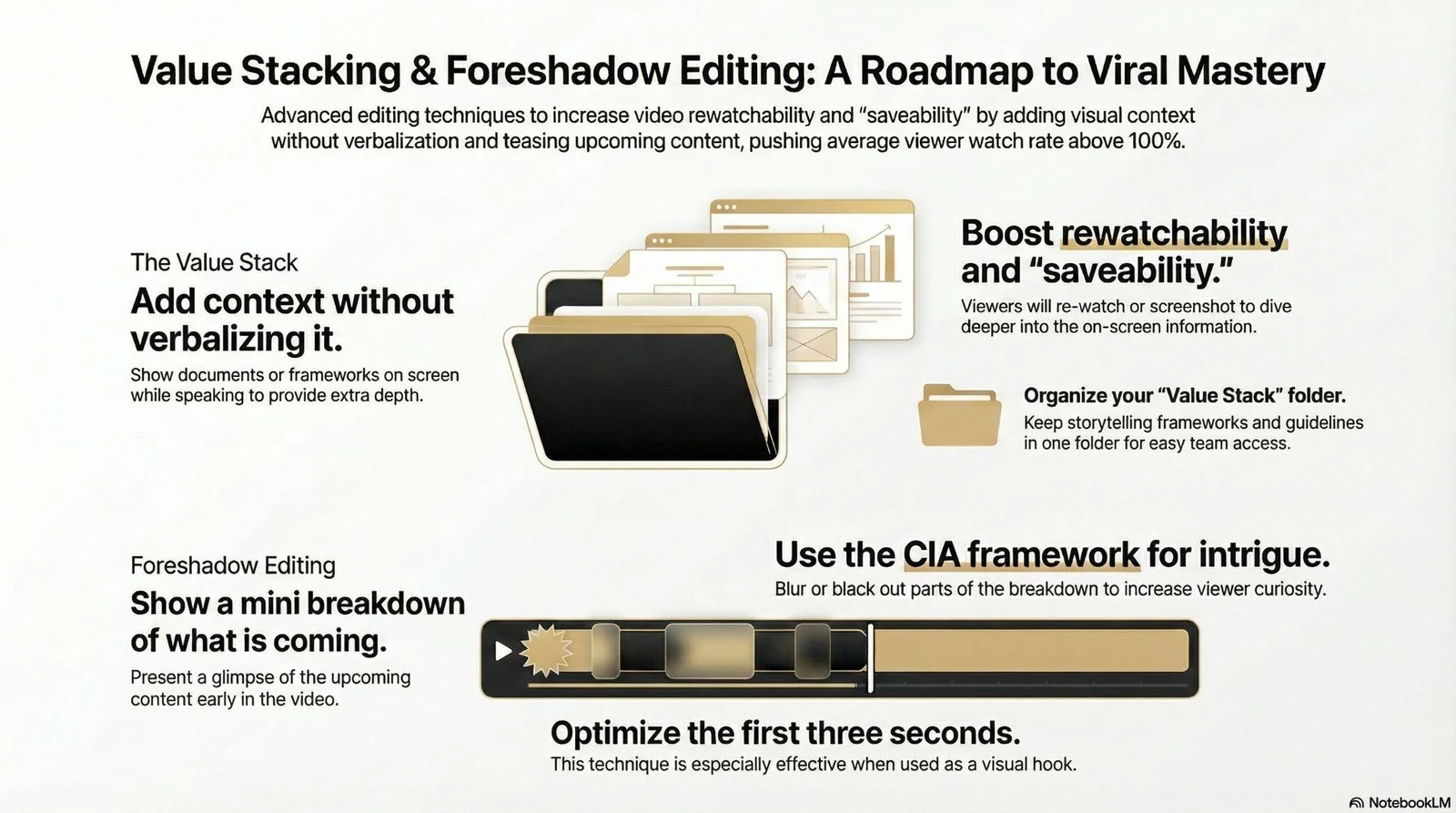
CIA structures each individual piece of content so a viewer moves from watching to wanting a next step. The three phases are Capture, Inform, and Action. Without this structure, most coaching videos earn decent watch time but generate no DMs, no saves, and no discovery calls.
Here is how each phase works.
C – Capture. The first three seconds. Not a teaser. Not a question hanging in the air. A specific, concrete statement that stops the right person cold.
“If you have been posting for three months and still getting no DMs, here is exactly why.”
That sentence filters immediately. Coaches three months in with no DMs stop scrolling. Everyone else skips. That is the goal. You want the right person, not every person.
I – Inform. The middle of the video. This is where you deliver the actual mechanism, not a tip, not general encouragement, but the specific named step or framework that changes how they understand their problem.
This is where you build the credibility bank. Every piece of real, specific insight you deliver adds to it. Every vague motivational statement withdraws from it. The credibility bank is what determines whether a first-time viewer decides to follow you or keep scrolling. A strong Inform section on a 60-second video does more for trust than three months of daily posts without one.
A – Action. The last few seconds. Not “follow me for more.” Something specific.
“Send me the word PLAN and I will tell you the one thing I would change first.” Or: “Save this because you will use it in month two.”
The CIA framework is why one coaching video with 3,000 views can generate more inquiry than a trending reel with 300,000. The structure filters for the right person at every stage.
Write out each phase before you film. Capture, Inform, Action. Then hit record.
For what that looks like in practice, the Instagram Reel template has the structure laid out shot by shot.
What Are the Two Growth Curves Every Coach Should Know?
Growth A is nothing happens until everything happens: a flat period followed by a sudden breakout video. Growth B is linear, where your baseline view count rises steadily with no dramatic spike. Both produce results. Most coaches quit during Growth A’s flat period, which is the only reliable way to fail.
I’ve seen both play out with real creators and the pattern is consistent.
Growth A looks like this from the inside. You post. Views are decent. Nothing exceptional. You post again. Same. Week after week, the numbers feel flat. Then one video hits. Overnight. You go from 800 views per video to a reel that clears 200,000. In two days you gain more followers than you had in the previous four months. Boom.
Growth B is different. No dramatic moment. But every few weeks, your baseline ticks up. Your average moves from 1,000 views to 2,000, then 4,000, then 10,000. One or two videos outperform the rest. You double down on those. The baseline keeps rising. And so on and so forth.
The problem: from the outside, early Growth A and early Growth B look identical. Both look slow. Coaches on Growth A think they are failing. They quit two videos before the breakout.
The fix is to measure improvement, not just outcomes.
Is your average watch time going up? Are more videos hitting above your previous baseline? Are you getting any DMs, even from a small audience? If yes to those, you are not failing. You are building. Focus on that and stay in it.
Your 90-Day Instagram Growth Strategy, Phase by Phase
Month 1 (Days 1-30): Lock In Your CCN and Build the Baseline
Before you worry about volume or reach, get your CCN right.
Write one sentence: “My content is for [specific person] who has [specific problem] and has already tried [common failed approach].”
If you cannot finish that sentence without going vague, your content will reflect the vagueness.
Once you have your CCN:
- Post three to five Reels per week. Consistency over volume.
- Use the CIA structure on every video. Capture, Inform, Action. No exceptions.
- Keep Reels under 90 seconds. Instagram’s growth guidance confirms Reels drive more than half the time users spend on the platform. Short, complete Reels outperform long ones for new accounts.
- Do not boost posts. If your organic content is not converting, boosting it only amplifies the problem. Learn to do organic well first. There is no shortcut around it.
- Write your bio as a CCN statement. “I help [specific person] do [specific result]” beats a credentials list every time.
At the end of month one you should have 15-20 videos posted. Look at the three that performed best, not just by views, but by DMs, saves, and comments. Those three tell you what your audience wants more of. That is your month two starting point.
Month 2 (Days 31-60): Raise the Quality Ceiling
Month two is about iteration, not invention.
Take your three best videos from month one. Make sharper versions of each. Same topics, tighter execution.
- Sharpen your hooks. “Three mistakes coaches make on Instagram” is fine. “If you have posted for 90 days and your DMs are still empty, it is almost always one of these three things” is better. Specific beats clever every time.
- Track your sends per reach. If a video got shared a lot, identify what specifically triggered the share and replicate that element.
- Use Trial Reels once you reach 1,000 followers. Trial Reels show your content to non-followers first. It is a built-in reach test before the video hits your existing audience.
- Keep building the credibility bank. Every video with a specific mechanism adds to it. You get the gist.
Month two is also when you start converting the audience you have built. You should be getting at least some DMs by now. Respond to every single one. A DM conversation is worth more than 1,000 new followers. The guide to finding clients on Instagram walks through what that process looks like in practice.
Month 3 (Days 61-90): Add the Conversion Layer
By month three you have a working content engine. Now you add the layer that turns that engine into a client pipeline.
Three moves.
1. Add a path from every video to a next step. Not always a direct offer. But somewhere. A specific DM prompt. A Story that shows the detail behind the Reel. The video that makes someone curious is not the one that books the call. It starts the conversation.
2. Use Stories to qualify your existing audience. Stories reach your warmest audience: people already following you. Use polls and question prompts to find who is actively dealing with the problem you solve right now. Someone who responds to “still posting but getting no DMs?” is a high-priority follow-up. The Instagram Story templates for coaches page has the structures built for exactly this kind of qualification.
3. Sharpen the profile-to-DM path. Pin one to three posts: your clearest methodology explanation, a client transformation story focused on the change they experienced, and a direct DM prompt. Your link in bio should point to one clear next step, not a link tree with seven options.
At the end of 90 days you have a defined CCN, a content library of 30-plus videos, and the beginning of a DM-to-discovery-call workflow.
How Do You Turn Instagram Views Into Discovery Calls?
The path from a view to a booked call has three steps: the right content attracts the right follower, a clear profile converts that follower to a DM conversation, and a specific action prompt in each video moves the DM to a scheduled call. The CCN and CIA frameworks handle all three.
My followers never DM me. What am I doing wrong?
Usually one of two things.
Either your content is attracting the wrong person (a CCN problem) or your call to action is too vague (a CIA problem). “Follow for more tips” is not a CIA action. “DM me the word PLAN and I will tell you the one thing holding your content back” is.
The specificity of the action determines the response rate. That is the whole game.
If you want to know what the conversation looks like once the DM arrives, the Instagram DM script for discovery calls covers the specific language that moves a DM into a scheduled call without feeling pushy.
Does It Matter Which Platform You Start On?
Yes. Pick one and commit to it fully. Your active thinking, filming, and iteration should go into one platform only. Once the content exists, repost it everywhere else. The best platform is whichever one you already spend time on, because long-term consistency beats the theoretically optimal platform every time.
Mental focus goes into one platform. The others get the repost. That is the whole strategy.
For coaches, Instagram tends to produce a more bought-in audience than TikTok, even when TikTok generates higher raw view counts. Higher views with lower follow-through is a false signal. It looks like traction and it is not.
The best diet is the one you can stick to long-term. Same principle applies to platforms.
If you want to understand the thinking behind Max’s approach to platform selection and organic-first growth, his background and the philosophy behind this system are laid out at Max Tornow’s story.
What About the Instagram Algorithm Changes in 2026?

Three 2026 changes matter most for coaches: unified topic controls that route niche content directly to interested users, expanded originality protections that can remove repurposed content from recommendations, and account-level penalties for repeated violations. All three reward specific, original teaching over generic tips.
The biggest change is the June 2026 “Your Algorithm” update. Instagram unified topic controls across Feed, Reels, and Explore. Users now declare topics they want to see. Your content gets routed to those users with a topic label. A sharp CCN helps Instagram categorize you correctly. A vague one gets misrouted or ignored.
On originality: Instagram’s content policies explicitly exclude content that is “unoriginal or reproduced without making meaningful enhancements” from recommendations and monetization. Repurposing someone else’s content wholesale is not just bad strategy. It can remove you from recommendations entirely.
And Instagram’s recommendations guidelines are clear: accounts that repeatedly post against those guidelines can lose all recommendation eligibility for a period, not just the offending post. The whole account. One shortcut can cost months of reach.
The throughline on all three is the same. Be specific. Be original. Teach real things.
Want the templates behind content that actually gets watched? Grab the templates here and start with the first one today.