
Key Takeaways
- A real instagram post template has four parts: the hook, the body, the close, and the caption. Most design packs give you one of those.
- Three ranking signals drive reach: watch time, likes per reach, and sends per reach. Sends are what push content to people who have never heard of you.
- The CCN framework tells you which type of viewer you are writing for. Most posts should target the casual, cold viewer.
- The CIA framework gives your post body a spine. Without it, even useful information gets ignored.
- Instagram’s originality rules expanded to photos and carousels in April 2026. Templates built on repurposed content lose recommendation reach across all feed formats.
- As of July 2025, Instagram captions are indexed by Google. A weak caption costs you on two platforms at once.
Why Most Instagram Post Templates Give You a Pretty Box With Nothing Inside
You search for an instagram post template. You find a Canva pack.
Fifty slides. Pastel backgrounds. A spot for your logo. A line that says “Write your caption here.”
You download it. Customize the colors. Post it.
It gets 60 likes from people who already follow you.
Here is the problem. That pack gave you the container. It skipped everything that drives actual reach: the hook structure, the post body, the caption that signals the algorithm, and the close that makes someone send the post to a friend.
This post gives you the fill-in-the-blank structure for every content pillar. Education, credibility, social proof, conversion. Each template maps to a specific goal and a specific ranking signal. Let’s crack into it.
What Does a Real Instagram Post Template Actually Contain?
A real instagram post template has four parts: the hook, the body, the close, and the caption. Most Canva template packs give you the hook visually and leave the other three entirely to you.
That is why two creators can use the exact same design and get completely different results. The structure inside the post is doing the work, not the color palette.
Here is what each part does:
- Hook: Stops the scroll. Promises a specific result for a specific person.
- Body: Delivers one clear mechanism or step. Not five. One.
- Close: Gives the viewer one next action. Save this. Send this to a friend. DM me this word.
- Caption: Reinforces the hook and signals category to the algorithm and to Google.
Get all four right and the template works. Miss one and the post loses traction before it reaches anyone new.
Why Do Some Posts Reach New People While Others Stay in Your Follower Pool?
Instagram weights three signals when deciding who sees your post: watch time, likes per reach, and sends per reach. Likes are slightly more important for reaching people who already follow you. Sends are slightly more important for reaching people who do not.
That split changes how you build a template.
A growth template is designed to make someone say “I need to send this to a friend.” A community-engagement template is designed to make someone say “yes, exactly, this is me.” Those are different structures, different closes, different hooks. Treating them the same is why accounts stall after a certain follower count and cannot break through.
There is another change that makes caption structure even more important. Since June 2026, Instagram’s “Your Algorithm” feature is live across the main Feed. Users can now add or remove interest topics on every surface: Reels, Explore, and the main Feed. That means your caption keywords directly influence which audience pool sees your post, completely separate from who follows you. Your template needs the right words, not just the right design.
What Is the CCN Framework and How Does It Shape Your Hook?

The CCN framework identifies the three types of viewers your content reaches: the casual viewer, the core viewer, and the niche viewer. Most posts should be written for the casual viewer, because that is where growth lives.
Here is how it breaks down.
The casual viewer has never heard of you. They stumbled onto your post from a recommendation or a share. They know nothing about your methodology, your history, or your brand.
The core viewer knows your topic exists. They have tried to solve this problem before. They are familiar with some of the vocabulary.
The niche viewer is deep in your world. They follow you closely. They already trust you.
Hold on, Max. Are you saying I should dumb down my content for beginners?
No. I am saying you should write your hook for someone who does not know you yet. That is where the algorithm finds new people to show your post to. Once they stop scrolling, the body of your post can go as deep as you want.
Most creators write hooks for niche viewers. They use jargon. They reference frameworks from previous posts. They assume the reader already knows the context. The casual viewer has no idea what any of that means. They keep scrolling.
For your instagram post template, this changes the hook entirely. A hook written for the casual viewer names a result they already want. It does not require prior knowledge of your method to make sense.
Weak hook, written for the niche viewer:
“Why your CIA content pillar needs a credibility layer”
Strong hook, written for the casual viewer:
“Why your Instagram posts hit 200 views and then freaking stop”
The second line works for someone who has never heard of you. They just recognize the problem.
Fill-in-the-blank CCN hooks:
“Why your [type of content] gets [small disappointing result] and then stops”
“The real reason [frustrating outcome your audience experiences]”
“[Number] things nobody tells you about [common task in your niche]”
“Most [type of person] get this wrong: [specific thing]”
If you are a business owner, your casual viewer is a potential client who is searching for answers. Write the hook for them and the algorithm puts your post in front of them. That is the whole mechanism.
What Is the CIA Framework and Why Does Your Post Body Need It?
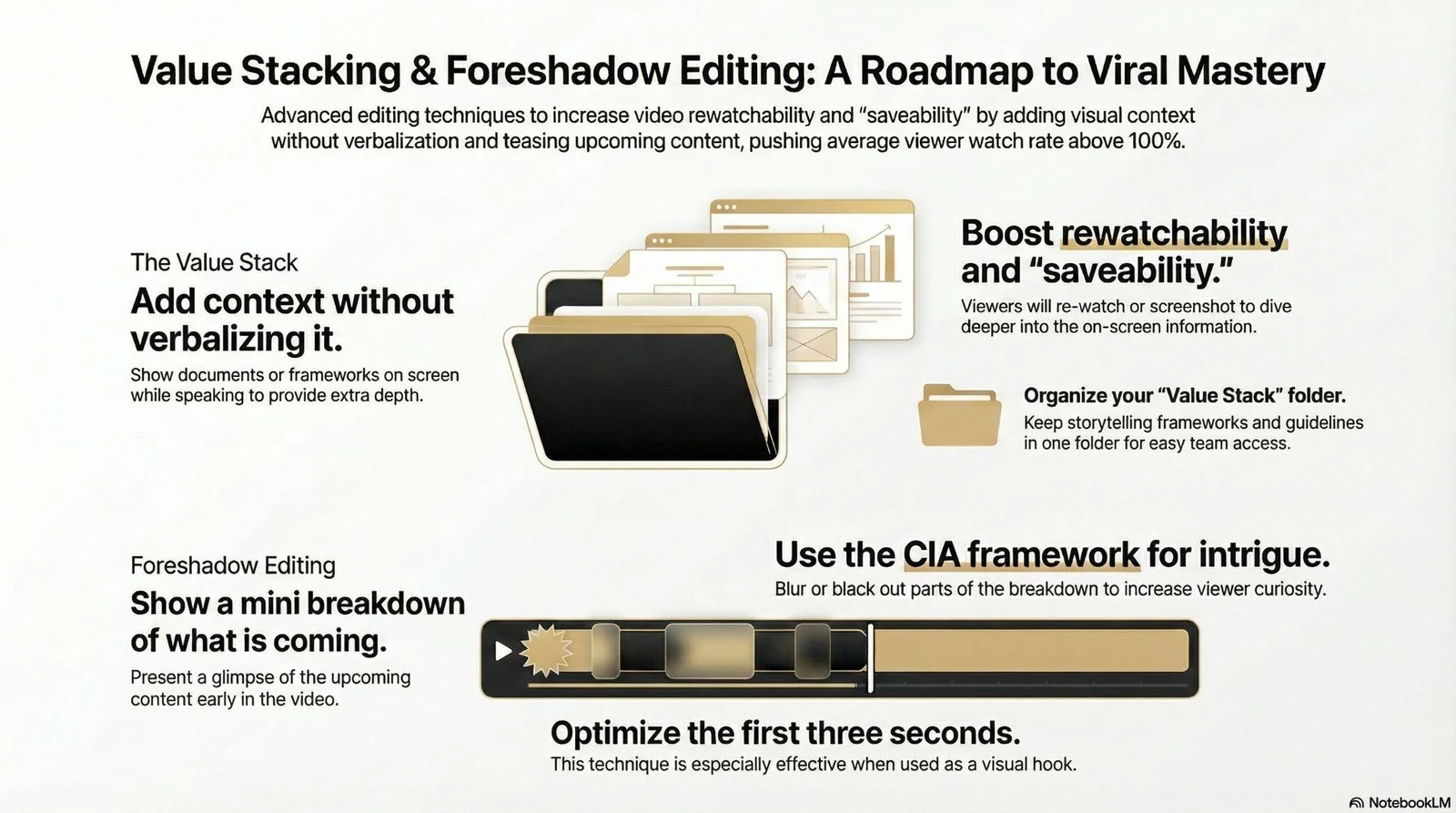
CIA is Max’s structure for the body of a post. The name is a bit much, he would be the first to tell you that. But the mechanism is what matters.
Every post body needs three things to actually work.
Claim: State the specific thing you are teaching. One sentence. Direct. No hedging.
“The reason your carousels get saved but do not convert to followers is that the last slide has no outward-pointing call to action.”
Information: Give the mechanism. This is the reason to believe the claim. One real example, not a vague principle.
“Instagram’s algorithm counts saves as a quality signal. But saves keep people inside the post. You need a final slide that prompts someone to share the post, click to your profile, or DM you a specific word.”
Action: One thing the reader does right now based on what they just learned.
“Pull up your last five carousels. Look at the final slide. Does it tell someone to do something that moves them outside the post?”
Most posts skip the Information step. They open with a strong hook, make a claim, and jump straight to a CTA. The reader never had a reason to trust the claim. They liked the hook. The body did not earn the close.
The CIA structure fixes this. The claim earns attention. The information earns trust. The action closes the loop.
This is the backbone for every post type: education, credibility, and conversion. The content changes. The structure stays the same.
For a full slide-by-slide breakdown built on this structure, see the carousel template guide here.
What Does the Education Post Template Look Like?
The education post is your most important content pillar. It reaches cold audiences when the hook is written for the casual viewer and the close drives sends. Use it for three to four of every five posts you publish.
Hook (CCN framework, write for the casual viewer):
“The real reason [frustrating outcome your audience experiences]”
“[Number] things I wish someone told me about [core skill in your niche]”
“Most [type of person] get this wrong: [specific thing]”
Body (CIA structure):
- Claim: Name the one thing you are teaching. Be specific about the mechanism, not just the outcome.
- Information: Give the reason to believe. One example. One worked scenario.
- Action: Tell them one thing to do right now.
Close:
“Save this so you can come back to it.”
“Send this to someone who needs to hear it.”
Caption:
- First line restates the hook (this is what appears in the preview before the reader taps to expand).
- Two to three sentences using the keywords your audience would actually search.
- End with a soft question or a prompt to share.
Format note: Education posts work across Reels (watch time signal), carousels (save signal), and static posts (send signal). For fastest growth, Reels give you the widest surface area. For depth and saves, carousels win.
If Reels are your primary format, this Reel template breakdown maps the CIA structure directly to the video format.
What Does the Credibility Post Template Look Like?
This is where you build what Max calls the credibility bank. The credibility bank is not a single post. It is the running collection of posts and profile elements that tell a cold visitor: this person gets real results, here is the evidence, and here is the method behind it.
Max, I do not have a huge track record yet. How do I even start?
One real result for one real person is enough. You do not need a wall of testimonials. You need one clear transformation and the mechanism that produced it.
The credibility bank has three components: who you are, what you do, and results. These map to the three highlight categories Max teaches for an Instagram profile. They also map to three distinct post types.
Credibility post hooks:
Who you are:
“I used to [describe the before state your audience is in]. Here is what changed.”
What you do:
“Most [type of person] rely on [common but flawed approach]. Here is why that keeps failing.”
Results:
“[Specific transformation in plain terms, no dollar figures]”
Body (CIA structure):
- Claim: What happened, and why it matters to the reader.
- Information: The specific mechanism that produced the result. Not the outcome number. The why behind it.
- Action: What the reader can check or try right now based on that mechanism.
Close:
“If this resonates, follow for more on [your core topic].”
“DM me [specific word] and I’ll send you the breakdown.”
Caption: Name your specific method or approach here. This is where contrarian ideology shows up. Do not describe your product. Explain why the conventional approach to this problem is wrong and what the right mechanism is. That is the credibility post caption doing its job.
For the full profile setup that makes these posts land harder, see the bio, highlights, and pinned posts template.
What Does the Conversion Post Template Look Like?

The conversion post is direct. It is not for growing your audience. It is for moving warm followers to take the next step.
Use it sparingly. One conversion post for every three to five education or credibility posts is a healthy ratio. More than that and your whole feed starts to feel like a sales page.
Hook:
“If you are a [specific type of person] dealing with [specific problem], this is for you.”
“Quick question: are you still [situation your warm audience is stuck in]?”
Body (CIA structure):
- Claim: What result does the reader get?
- Information: What is the specific mechanism that produces that result? One clear answer. No fluff.
- Action: The exact next step, stated once.
Close:
“DM me [specific word] and I will tell you if this is a fit.”
“Link in bio.”
Caption: Short. Restate the hook in the first line. Name the one next step. Done.
Do not write a wall of text on a conversion post. Warm audiences already trust you. They need one clear door, not a full explanation.
Does the Caption Actually Matter for Reach?
Yes, and this changed significantly in 2025. A well-written caption now does two jobs at once: it signals category to Instagram’s recommendation engine, and it gets crawled by Google.
Public content from professional Instagram accounts became Google-indexable by default on July 10, 2025. Users can opt out via privacy settings. For everyone else, a caption with clear keyword language now shows up in Google search results for people who have never opened Instagram.
The practical fix for your template: put your core keyword in the first line of the caption. Not stuffed in unnaturally. Written the way someone would say it out loud, the way they would type it into a search bar.
Every instagram post template you build from this point forward should include this as a default step: hook first, keyword in line one of the caption, then the rest of the copy.
On hashtags: Instagram capped hashtag use at five per post as of December 2025. The algorithm categorizes content on its own now. Three to five targeted tags at the end of the caption is plenty. They are a secondary signal, not a reach strategy.
Do the Originality Rules Affect Template Strategy?
Yes, and this is new enough that a lot of creators are getting caught off guard.
Instagram penalizes accounts that primarily repost others’ content by removing those posts from recommendation surfaces. This was already true for Reels. As of April 30, 2026, it applies to photos and carousels too.
The lazy version of a template strategy is: find a post that worked for someone else, copy the format, swap your branding. That is repurposed content. Instagram’s system now catches this across every feed format, not just video.
The originality test is simple. Does your post add information, context, or a viewpoint that did not exist in the source material? Yes? You are fine. No? You are at risk of losing recommendation reach entirely.
Your templates provide the structure. Your content fills them. The mechanism, the examples, and the specific language all have to come from your own experience. That is what makes the post original, and that is what earns recommendation reach.
How Often Should You Post With These Templates?
Post as often as you can keep the quality high. Minimum every other day. Daily if possible.
Hold on, Max. Does quality actually change depending on which template type I am using?
Yes. An education post built on the CIA structure takes longer to get right than a quick credibility post. A conversion post should appear rarely enough that it still feels direct when it does show up.
A simple weekly rhythm that works: three education posts, one credibility post, one conversion post. Five posts a week without burning out on conversion content or flooding your feed with offers.
Consistency matters more than peak output. An account that posts every other day for six months beats an account that posts five times a day for three weeks and then goes quiet.
For the full breakdown on cadence and what actually happens to your reach when posting frequency drops, this post on how often to post on Instagram covers it in detail.
How Do You Know Which Template to Use for Each Post?
Here is the simple version. Ask one question before you start writing: who is this post for and what do I want them to do?
Trying to grow and reach cold audiences? Use the education post template. Write the hook for the casual viewer using the CCN framework. Close with a send or save prompt.
Trying to build trust with people already following you? Use the credibility post template. Add to your credibility bank over time. Lead with a mechanism, not a result number.
Trying to move warm followers to act? Use the conversion post template. Keep it short. One door only.
Not sure which one you need? Look at your last ten posts. Count how many were education, how many were credibility, and how many were conversion. Most accounts are heavy on one type and missing the others entirely. That imbalance is usually the root of a growth or conversion problem, not the design or the posting time.
Getting this right across all three pillars, consistently, is what makes an Instagram presence that actually builds a business. You can read through the track record of what that looks like in practice on the Max Tornow reviews page.
Want the templates behind content that actually gets watched? Grab the templates here and start with the first one today.